
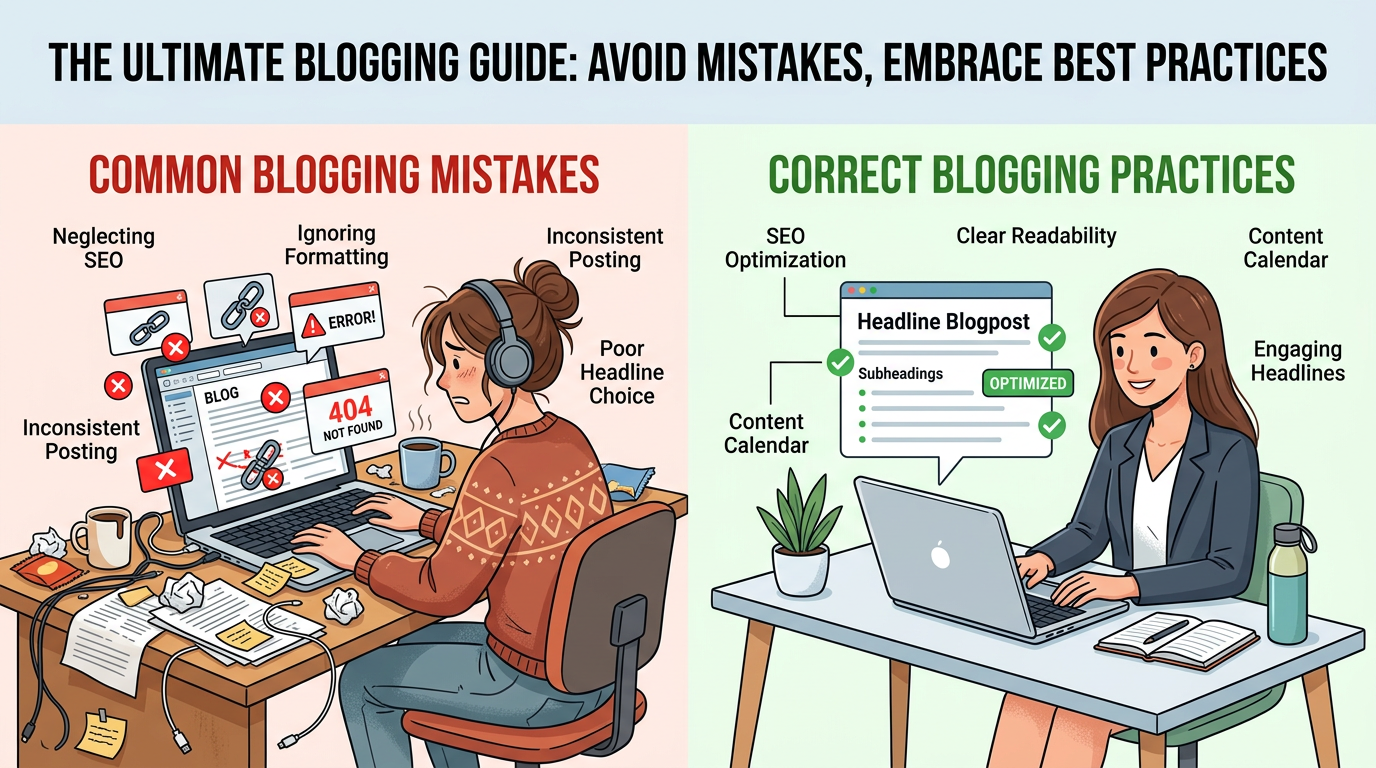
Blogging is a long-term process that requires planning, consistency, and learning. Many new bloggers make mistakes that slow down growth or reduce traffic. Understanding these mistakes helps improve results and build a strong blog.
This guide explains common blogging mistakes and how to avoid them.
Not Having a Clear Topic
One of the first mistakes is starting a blog without a clear topic. A blog without focus becomes difficult to manage and hard to grow.
Problems include:
- Mixed content
- Confused audience
- Low engagement
Always choose a specific topic before starting.
Posting Without Planning
Some bloggers publish content without a plan. This leads to random topics and inconsistency.
A lack of planning causes:
- Irregular posting
- Poor content structure
- Weak audience interest
Create a content plan before writing.
Ignoring Audience Needs
Blogging is about readers. If content does not match audience needs, traffic will not grow.
Common mistake:
- Writing only for yourself
Instead:
- Understand what users search for
- Solve their problems
- Provide useful information
Not Doing Keyword Research
Keywords help search engines understand content. Without keywords, blogs struggle to rank.
Mistakes include:
- Writing without search terms
- Ignoring search intent
Use simple keyword research before writing posts.
Copying Content
Copying content from other websites is a serious mistake. It affects ranking and trust.
Problems include:
- Low search visibility
- Loss of credibility
- Risk of penalties
Always write original content.
Ignoring SEO
Search engine optimization is important for blog traffic. Many beginners ignore it.
Missing SEO leads to:
- Low search ranking
- Poor visibility
Basic SEO includes:
- Titles with keywords
- Proper headings
- Internal linking
Inconsistent Posting
Posting once and stopping for long periods slows growth. Consistency is important in blogging.
Issues include:
- Losing audience interest
- Lower ranking
Set a regular posting schedule.
Poor Content Quality
Some blogs focus on quantity instead of quality. Weak content does not attract readers.
Good content should:
- Be clear
- Be useful
- Answer questions
Focus on value, not just volume.
Ignoring Blog Design
A blog that is hard to read or navigate reduces user engagement.
Common problems:
- Confusing layout
- Small text
- Poor structure
Keep design simple and clean.
Not Promoting Blog Posts
Publishing content is not enough. Without promotion, traffic stays low.
Mistake:
- Waiting for users to find content automatically
Instead:
- Share on social media
- Use communities
- Build backlinks
Ignoring Mobile Users
Many users browse blogs on mobile devices. If a blog is not mobile-friendly, users leave quickly.
Ensure:
- Responsive design
- Easy reading on small screens
Slow Website Speed
A slow website affects user experience and search ranking.
Causes include:
- Large images
- Poor hosting
- Heavy design
Improve speed for better performance.
Not Using Analytics
Without tracking data, it is hard to know what works.
Analytics helps:
- Understand traffic sources
- Identify popular posts
- Improve strategy
Ignoring Old Content
Old posts can lose ranking over time. Many bloggers forget to update them.
Update content by:
- Adding new information
- Fixing errors
- Improving structure
Overusing Keywords
Using too many keywords in content looks unnatural and affects readability.
Problem:
- Keyword stuffing
Solution:
- Use keywords naturally in sentences
Not Building Backlinks
Backlinks improve blog authority. Many beginners ignore this step.
Without backlinks:
- Ranking becomes harder
Build links through:
- Guest posting
- Sharing useful content
Lack of Patience
Blogging takes time. Many bloggers quit early when they do not see quick results.
Common issue:
- Expecting fast income or traffic
Growth takes consistency and effort.
Not Engaging With Readers
Ignoring comments or feedback reduces connection with readers.
Engagement helps:
- Build trust
- Increase return visitors
Respond to comments when possible.
Using Weak Headlines
Titles decide whether users click your content. Weak headlines reduce traffic.
Good headlines:
- Are clear
- Match search intent
- Include topic keywords
No Clear Monetization Plan
Some bloggers start without thinking about income methods.
Common options include:
- Ads
- Affiliate marketing
- Services
Plan monetization early.
Conclusion
Blogging mistakes are common, especially for beginners. Most of these mistakes can be avoided with planning, consistency, and learning.
A successful blog requires clear focus, quality content, SEO, and regular promotion. By avoiding these mistakes, bloggers can improve traffic, build audience trust, and grow steadily over time.