
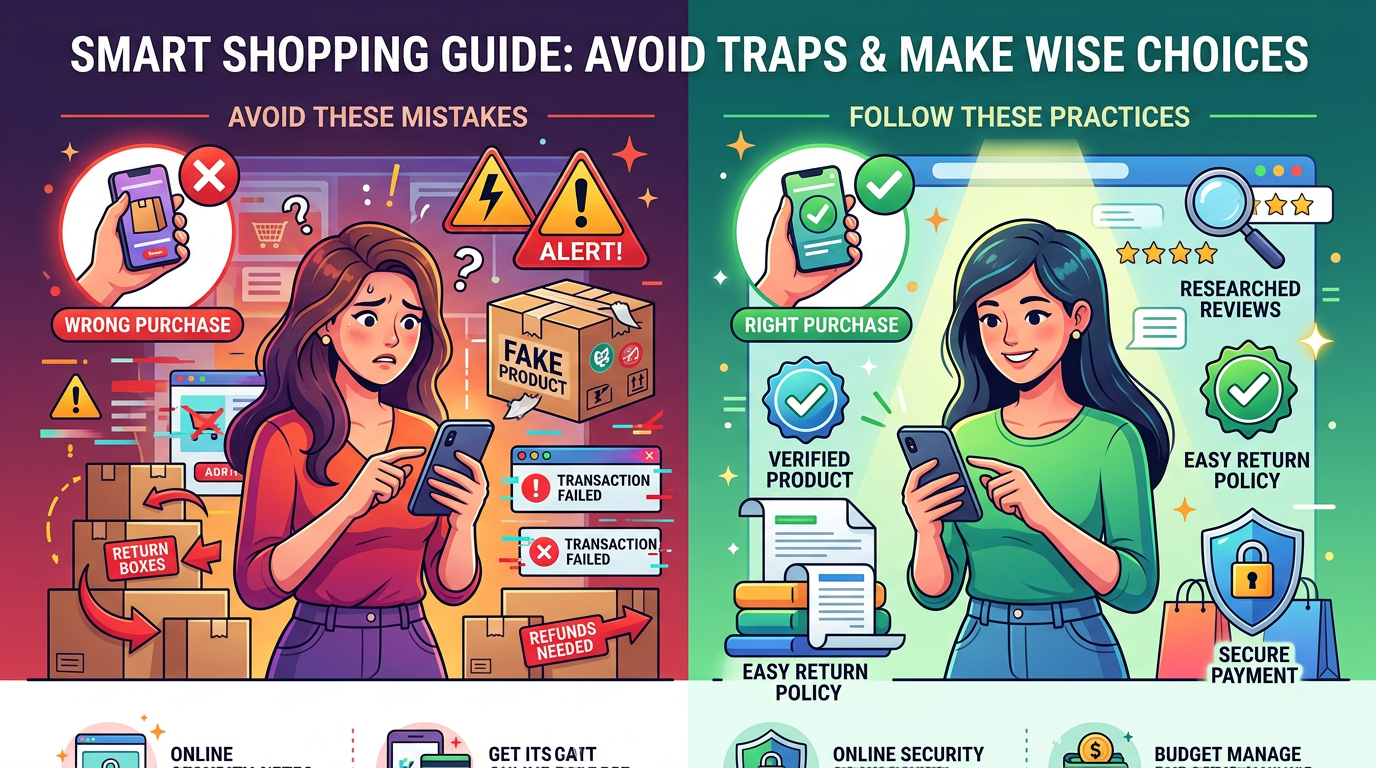
Online shopping is a common activity. It offers access to products and services without visiting a store. While it is easy to use, many users make mistakes that lead to loss of money, time, or data. Understanding these mistakes helps improve the shopping experience and reduces risk.
This guide explains common online shopping mistakes and how to avoid them.
Not Checking Website Authenticity
One of the most common mistakes is using an unknown or unverified website. Some websites are created to collect user data or payments without delivering products.
Before using a website:
- Check the website address
- Look for contact details
- Verify customer support options
Using trusted platforms reduces risk.
Ignoring Website Security
Many users do not check if a website is secure before entering personal or payment details.
Signs of a secure website include:
- “https” in the URL
- A lock icon in the browser
Ignoring these signs can lead to data theft.
Using Weak Passwords
Weak passwords make accounts easy to access. Many users use simple or repeated passwords across platforms.
To avoid this mistake:
- Use a mix of letters and numbers
- Avoid common words
- Change passwords regularly
Strong passwords protect accounts.
Not Reading Product Details
Skipping product details can lead to wrong purchases. Users may receive items that do not match their needs.
Always check:
- Product description
- Size or specifications
- Price details
Reading information helps make correct decisions.
Ignoring Customer Reviews
Some users buy products without checking reviews. This can lead to poor choices.
Reviews provide information about:
- Product quality
- User experience
- Possible issues
Reading reviews helps avoid disappointment.
Falling for Unrealistic Offers
Very low prices can attract buyers. However, not all offers are real. Some deals are designed to mislead users.
Warning signs include:
- Prices far below market value
- Limited-time pressure
- Unknown sellers offering large discounts
Always compare prices before buying.
Not Comparing Prices
Buying from the first website without comparing prices can result in higher cost.
To avoid this:
- Check multiple platforms
- Compare total cost including shipping
Price comparison helps find better deals.
Ignoring Shipping Costs
Some users focus only on product price and ignore delivery charges. This increases the total cost.
Before buying:
- Check shipping fees
- Look for free delivery options
This ensures accurate spending.
Not Checking Return Policy
Return policies explain how to return a product if it does not meet expectations. Ignoring this can create problems later.
Important points include:
- Return period
- Conditions for return
- Refund method
Always review policies before purchase.
Saving Payment Details on Untrusted Sites
Some websites ask users to save payment information for faster checkout. Saving this data on untrusted platforms can be risky.
To stay safe:
- Avoid saving payment details on unknown sites
- Use secure payment methods
This protects financial information.
Using Public Wi-Fi for Transactions
Public Wi-Fi networks are not secure. Making payments on these networks can expose data.
To avoid this:
- Use a private connection
- Avoid entering sensitive information on public networks
This reduces risk of data theft.
Not Tracking Orders
After placing an order, some users do not track delivery. This can cause confusion or delays.
Tracking helps:
- Monitor shipment
- Know delivery status
- Take action if needed
Always check order updates.
Ignoring Seller Ratings
Buying from sellers without checking their ratings can lead to poor service.
Before purchasing:
- Review seller ratings
- Read customer feedback
This helps choose reliable sellers.
Clicking on Unknown Links
Some users click links from emails or messages without verifying them. These links may lead to fake websites.
To stay safe:
- Avoid clicking unknown links
- Visit websites directly
This prevents phishing attacks.
Sharing Too Much Personal Information
Providing extra information that is not required can increase risk.
Only share:
- Name
- Address
- Contact number
Avoid sharing sensitive data unless necessary.
Not Keeping Proof of Purchase
Some users do not save order details or payment receipts. This can create problems if there is an issue.
Keep:
- Order confirmation
- Payment receipt
- Tracking number
These records help resolve disputes.
Making Impulse Purchases
Buying without planning can lead to unnecessary spending. Some users purchase items due to offers without real need.
To avoid this:
- Think before buying
- Compare options
- Wait before checkout
This improves decision making.
Ignoring Updates and Security Measures
Using outdated devices or apps can expose users to security risks.
Steps to follow:
- Update apps and systems
- Use antivirus tools
- Keep devices secure
This protects user data.
Not Logging Out on Shared Devices
Leaving accounts open on shared devices can allow others to access personal information.
Always:
- Log out after use
- Clear browsing data if needed
This adds safety.
Lack of Awareness
Many mistakes happen due to lack of knowledge. Users who understand online shopping risks can avoid most problems.
Learning basic safety steps improves the overall experience.
Conclusion
Online shopping mistakes can lead to loss and frustration. Most of these mistakes can be avoided with simple checks and careful actions.
By verifying websites, reading product details, comparing prices, and using secure methods, users can reduce risk and shop with confidence. Awareness and attention play a key role in safe and effective online shopping.